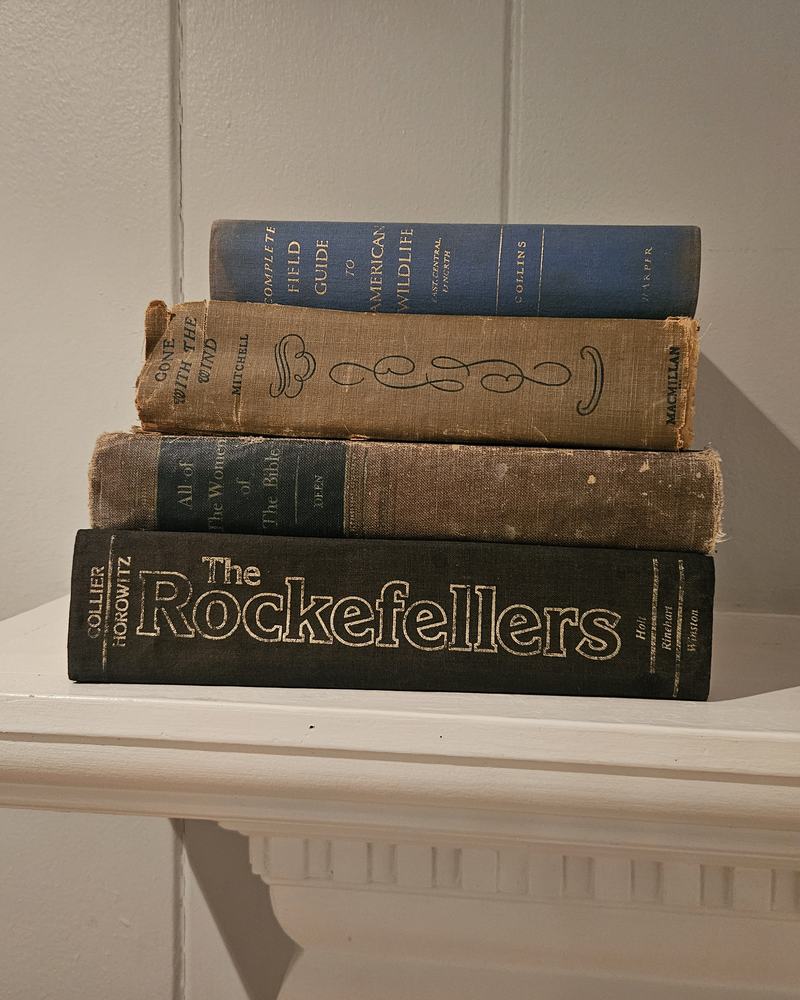
Styling guide
Zoom Background Bookshelf: Style a Shelf for Video Calls
For a good video-call bookshelf, set up the camera, light and distance first, then style only what the camera sees: medium-tone books in upright runs and short stacks, one plant or lamp for depth, and nothing cluttered or crooked. Below are both steps in detail.
Start with the camera, not the shelf
Your camera decides which part of the shelf matters. Before you move a single book:
- Raise the camera to eye level. Duke University's video-call tips recommend placing the camera at eye level. A stack of books under a laptop works fine.
- Open your camera preview and note which shelves appear behind your head and shoulders. Usually that's two or three shelves.
- Style only that zone first. Everything outside the frame can wait.
Get the light right
A beautifully styled shelf still looks bad if you're a silhouette.
- Face the window. Duke advises facing a window rather than sitting with it behind you, because backlighting darkens your face (Duke).
- Add a warm lamp. Washington State University's Zoom guidance suggests a warm desk lamp at about eye height to light your face.
- Light the shelf softly. A small lamp on the shelf or a picture light adds warmth and separates you from the background.
Leave some distance
Vimeo's guide to looking good on video notes that some distance between you and your background adds depth, and recommends neatly arranged shelves. If your chair is right against the bookcase, the shelf crowds your head. Pull the desk forward a few feet if the room allows.
Live background vs. virtual background
Duke lists bookcases, plants and artwork as good backgrounds and prefers a live background to a photo background. Virtual backgrounds can blur or clip around your hair and hands as you move. A real shelf avoids that and looks more natural.
Which book colors read best on camera
Cameras compress detail, so color and shape matter more than titles. Here's how palettes read on screen:
| Palette | On camera | Good for |
|---|---|---|
| Navy and blue | Calm, trustworthy | Finance, law, consulting, healthcare |
| Tan and soft brown | Warm, approachable | Coaching, therapy, education |
| Cream and ivory | Bright, airy | Small or dark rooms |
| Black and charcoal | Crisp, modern | Tech, design, architecture |
| Mixed bright spines | Busy, distracting | Usually avoid |
Navy books like our Tidewater lot are a popular office choice. Driftwood tan warms things up. If your wall is dark, lead with Dunes cream so the shelf doesn't vanish.
One more camera consideration: very busy patterns can shimmer on video. Grouping books into solid color runs keeps the image steady.
A simple layout for the camera zone
For a typical two- or three-shelf frame behind your head:
- Shelf at head height: keep this one the lightest, with one short run of books and one object, so nothing appears to sprout from your head.
- Shelf above: a horizontal stack on one side, a plant trailing over the edge on the other.
- Shelf below (shoulder level): a longer run of books with a bookend, and a small framed print.
Balance left and right so the frame doesn't feel lopsided when you sit off-center. For more on layering a whole bookcase, see how to decorate bookshelves with books.
Objects that work on camera
- One plant (real or high-quality faux). Duke specifically lists plants as a good background element.
- A small framed print or artwork
- A lamp for warm light
- A clock or simple ceramic
- Something personal but neutral, like a framed landscape photo or a degree in a simple frame
Avoid anything you'd rather not discuss on a call: personal paperwork, piles of mail, family photos you'd prefer to keep private, or anything with readable text or logos.
Floating shelves for a home office
No bookcase? Two floating shelves behind your desk work well on camera:
- Hang them so the lower one sits around shoulder height when you're seated, and the upper one sits above your head in frame.
- Put about a foot of books on each, a stack on one end and a run on the other.
- Mirror the arrangement between the shelves.
Floating shelves need solid mounting, so follow the hardware's weight rating and anchor into studs. We cover sizing and styling in how to style built-ins and floating shelves.
Horizontal stacks are your friend
On camera, horizontal stacks read as clean blocks of color and keep spine titles from becoming a distraction. Mixing upright runs with two or three horizontal stacks also adds shape. See styling books horizontally vs. vertically.
Common video background mistakes
- Overfull shelves. Packed shelves look cluttered on screen. Aim for about two-thirds full.
- A shelf edge cutting through your head. Adjust your chair height or the camera.
- Clashing colors. Choose one or two book colors and repeat them.
- Backlighting. Turn your desk to face the window.
- Leaning books. Books that tip look sloppy on camera; use bookends. The Library of Congress also recommends keeping books upright rather than leaning.
- Forgetting the preview. Always check the camera view after you style, since a shelf that looks balanced in person may not be balanced in frame.
Backgrounds by profession
The right shelf depends on what you want people to feel when they see it. These are styling suggestions, not rules:
- Advisors, attorneys and consultants: navy and cream books in tidy runs, a brass lamp, one framed print. Calm and established.
- Therapists and coaches: tan and cream books, a soft plant, a ceramic object with a rounded shape. Warm and welcoming.
- Designers, architects and tech teams: black and cream books, lots of space, one sculptural object. Clean and modern.
- Teachers and tutors: a cheerful but organized shelf: green or aqua stacks mixed with cream, plus a globe or a plant.
- Real estate agents: a bright, neutral shelf that looks like a well-staged home. Our books for staging collection fits.
Small spaces and corner desks
If your desk faces a wall or sits in a corner, you still have options:
- Turn the desk so the camera faces into the room and a shelf is behind you.
- Use a narrow bookcase (about 24 inches wide) behind your chair; it fills the frame without taking much floor.
- Add one floating shelf at head height, styled with a single stack and a plant.
- Use a console behind you with a lamp and a five-book stack if a shelf won't fit.
How many books for a video background?
| Setup | Approximate books |
|---|---|
| Two floating shelves, 24-36 in | 1.5-3 ft |
| Three visible bookcase shelves | 3-4 ft |
| Full bookcase behind desk | 6-8 ft |
For other sizes, use how many books per foot of shelf.
A quick pre-call checklist
- Camera at eye level.
- Facing the light, with a warm lamp.
- Shelf about two-thirds full, books upright or in stacks.
- One plant, one print, nothing personal or readable.
- Nothing cluttered on the desk in frame.
- Preview checked.
Books for a video call background
Our color-sorted lots are real hardcover books in calm, camera-friendly palettes: $39.99 for a five-book shelf stack, $69.99 for 1 foot or $129.99 for 2 feet, with free shipping to the continental U.S. Browse the books by color collection to choose a palette for your office.
Frequently asked questions
What books look good in a Zoom background?
Books grouped by color in runs and stacks read best. Cream, tan, navy and charcoal look calm and professional on camera; lots of bright, mismatched spines look busy.
Is a real bookshelf better than a virtual background?
Duke University's video-call tips favor a live background, such as a bookcase, plants or artwork, over a photo background, which can glitch around your outline.
How far should I sit from my bookshelf on Zoom?
Leave some distance between you and the shelf so the background adds depth instead of crowding your head. A few feet usually works; check your camera preview.
How many books do I need for a video-call background?
Only what the camera sees. For most setups that is two or three shelves, or about 2 to 4 feet of books, plus a few objects and a plant.