Styling guide
How to Decorate Bookshelves With Books: 9 Stylist Steps
Decorate a bookshelf by using books as the main building material: pick two or three colors from the room, anchor the bottom shelf, place large objects first, then mix upright runs with horizontal stacks and leave about a third of each shelf open.
Here is the full process, step by step, from an empty case to a finished shelf.
Before you start: gather three things
- Books in a limited palette. Two or three colors that relate to the room. More on choosing them below.
- A handful of objects in different shapes: something tall (vase, plant, candlestick), something round or heavy (bowl, box, geode), and something flat (small framed print, tray).
- A tape measure. You'll want inside shelf widths so you know roughly how many feet of books to plan for. Our guide to how many books per foot of shelf has charts.
Step 1: Empty the shelves completely
It is tempting to shuffle things around in place. Don't. Take everything off, wipe the shelves, and start from zero. You'll see the bones of the bookcase (shelf heights, back panel color, lighting) and make better decisions.
Step 2: Pick a palette from the room, not the books
Look at the sofa, rug, curtains and wall color. Pull one main color and one or two supporting colors from what's already there.
Proven pairings:
| Room feel | Main | Support | Accent |
|---|---|---|---|
| Light and airy | Cream and ivory | Tan | Pale aqua |
| Warm traditional | Tan and brown | Burgundy and rust | Cream |
| Coastal | Navy and blue | Cream | Aqua |
| Modern | Black and charcoal | Cream | Tan |
| Fresh and natural | Green | Cream | Tan |
If the room already has plenty of color, go neutral on the shelves with Dunes cream and ivory and Driftwood tan and brown. If the room is mostly white, books are an easy way to add color without painting. See books by color for decorating for full palette ideas.
Step 3: Anchor the bottom shelf
The lowest shelf should look the heaviest. Fill it with upright books, the darkest or largest you have, running most of the width. Dark spines low and lighter spines high keeps the case from feeling top-heavy. Storm black and charcoal or navy works well here.
Step 4: Place your largest objects first
Before you put any more books in, set your two or three biggest objects on the middle shelves in a zigzag or triangle: one on the left of shelf 2, one on the right of shelf 3, one on the left of shelf 4. This diagonal rhythm is what makes styled shelves feel balanced rather than symmetrical and stiff.
Step 5: Add upright book runs
Now fill in around the objects with runs of upright books. Guidelines:
- Vary run length: a 12-inch run on one shelf, an 8-inch run on the next.
- Keep heights similar within a run. Grouping similar sizes looks tidy, and it is also better for the books: the Library of Congress recommends shelving books of similar size together so each cover is supported by its neighbors.
- Book ends optional. A run that ends against the side of the case needs nothing. A run that ends mid-shelf can lean against an object or a horizontal stack.
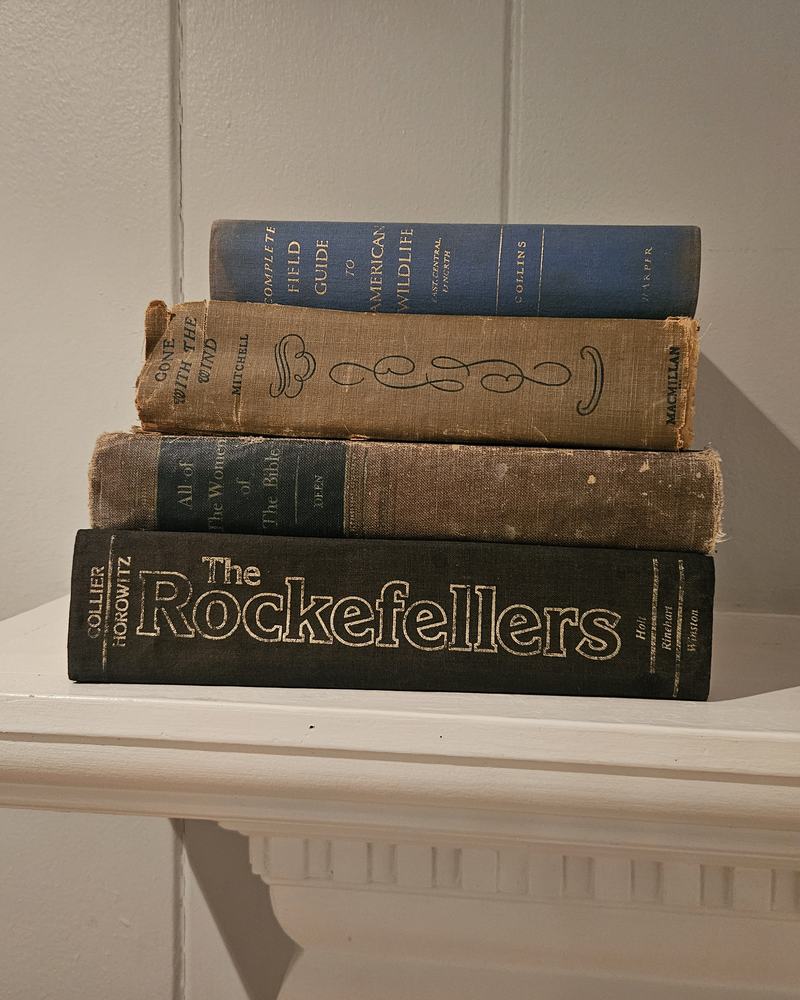
Step 6: Add horizontal stacks
Lay three to five books flat in a stack, largest on the bottom. Use stacks to:
- end an upright run so it doesn't lean,
- lift a small object (a candle or small vase looks deliberate on a stack),
- fill a short gap where an upright run would look skimpy.
Alternate: if shelf 2 has the stack on the right, put shelf 3's stack on the left. Our horizontal vs. vertical styling guide goes deeper.
Step 7: Leave breathing room
Aim for books covering roughly 60 to 70 percent of each shelf, objects another 10 to 20 percent, and the rest left open. Empty space is what makes your objects and books read as a composition. If a shelf looks crowded, remove one thing. If it looks bare, add a short stack before adding another object.
Step 8: Step back and squint
Stand across the room and squint. You're checking for:
- Color clumps: all the navy on one side? Move a few spines.
- Height rhythm: do the tall things zigzag?
- Weight: does the bottom look heavier than the top?
Take a phone photo. Photos flatten depth and reveal imbalance quickly, which is why stagers check their work through a camera.
Step 9: Edit once more
Remove one item from the whole bookcase. It's almost always an improvement.
Shelf-by-shelf template (5-shelf bookcase)
| Shelf | Books | Objects |
|---|---|---|
| Top | Upright run, right two-thirds | Small object left |
| 2 | Stack left, short upright run right | Tall vase on the stack |
| 3 (eye level) | Short upright run left | Your best piece, right, with space |
| 4 | Upright run right, stack left | Bowl or box on the stack |
| Bottom | Full upright run, darkest books | Optional basket at one end |
Styling by bookcase type
Not every shelf is a standard five-shelf bookcase. Adjust the method to the furniture:
| Bookcase type | What changes | Approach |
|---|---|---|
| Tall and narrow (24 in or less) | Little width per shelf | One element per shelf: a run or a stack with an object, alternating |
| Low and wide (credenza, console bookcase) | The top is a styling surface | Books on the shelves, a lamp plus a stack on top |
| Ladder shelf | Shelves get deeper toward the bottom | Stacks on the narrow top rungs, upright runs below |
| Cube organizer | Many small boxes | Books in about half the cubes, baskets and objects in the rest, in a checkerboard |
| Glass-front cabinet | Seen through doors | Fuller, more orderly runs; skip tiny objects |
| Open-back or etagere | The wall shows through | Fewer books, more space; let the wall color be part of the look |
Choosing objects: a quick checklist
For one five-shelf bookcase, you usually need only five to eight objects in total:
- [ ] 1-2 tall pieces (vase with branches, candlestick, slim sculpture)
- [ ] 1-2 round or heavy pieces (bowl, geode, wooden box)
- [ ] 1 plant (trailing plants soften shelf edges)
- [ ] 1 flat piece (small framed print leaning at the back)
- [ ] 1 personal piece (a travel find, a family heirloom), unless you're staging to sell
Repeat one material (brass, white ceramic, natural wood) at least three times across the case so the objects feel connected.
Lighting your shelves
Lighting changes how books look more than people expect.
- Picture lights or LED strips mounted under or above shelves make spines glow at night.
- Warm-toned bulbs keep cream and tan books looking warm; cool light can make them look gray.
- Don't rely on a sunny window. Daylight looks lovely, but the Library of Congress notes light damage is cumulative, and colored spines fade over time.
A 30-minute shelf refresh
Don't have an afternoon? This quick edit makes a big difference:
- Remove a third of the objects (5 minutes).
- Group books by color on each shelf, even roughly (10 minutes).
- Turn one run on each shelf into a horizontal stack and put an object on it (10 minutes).
- Move your best object to eye level with space around it (5 minutes).
Seasonal swaps without restyling
Keep the base of your shelves (the upright runs) the same all year and change only the stacks and small objects:
- Spring: green books on top of stacks, fresh stems
- Summer: aqua or navy accents, glass and shells
- Fall: rust and burgundy books, small pumpkins, brass
- Winter: deep green and burgundy, candles, evergreen sprigs
A five-book shelf stack in a seasonal color is an easy way to do this; see books by color for decorating for palettes.
Styling built-ins and wide shelves
Built-ins beside a fireplace should mirror each other loosely, not exactly. Use the same palette and the same number of objects on each side, but flip the zigzag. On very wide shelves (48 inches or more), divide the shelf into two "mini shelves" visually, each with its own run and stack. For layouts, weight limits on floating shelves and how much to order, see how to style built-ins and floating shelves.
Styling a bookshelf for a coastal home
Blue and cream is the classic coastal combination. Use Tidewater navy and blue for the lower shelves and cream above, or take the guesswork out with the ready-mixed Sandbridge navy and cream lot. Add one natural texture per shelf (rope, rattan, driftwood, a glass float). Full ideas in our coastal bookshelf decor guide.
Mistakes to avoid
- Too many small objects. Ten tiny things look like clutter; three medium things look styled.
- Every shelf identical. Repetition is good, mirroring is boring. Shift the pattern on each shelf.
- Ignoring the light. Shelves near a sunny window will fade over time. The Library of Congress notes that books should have no exposure to direct or intense light if you want to avoid fading.
- Books pushed to the very back. Pull runs forward so spines line up roughly with the shelf edge; recessed books look like storage.
- Mixing heights randomly. Group similar heights; a skyline of random heights looks messy.
- Fake book boxes everywhere. A few can work up high, but real spines have depth and texture that read better in person and on camera.
Where to get books for styling
The slowest part of styling is finding enough books in the right colors. River Birch Books sells real hardcover books sorted by color in 1-foot and 2-foot lots, plus 5-book coffee-table stacks, with free shipping to the continental U.S. Pick your palette in the books by color shop and you can be styling this weekend.
Frequently asked questions
How do you make a bookshelf look styled instead of cluttered?
Limit the color palette, leave about a third of each shelf open, and repeat the same few moves (an upright run, a horizontal stack, one object) in a zigzag pattern up the bookcase. Repetition and empty space are what read as intentional.
How many books should be on a decorative bookshelf?
For a styled look, books usually fill about 60 to 70 percent of each shelf. On a 30-inch shelf that is roughly 1.5 to 2 feet of books, or about 12 to 24 books depending on thickness.
Should books be arranged by color?
Grouping by color is the fastest way to make shelves look calm and designed. A full rainbow is a bold statement; most rooms look better with two or three related colors repeated across the shelves.
What do you put on bookshelves besides books?
Use a few objects with different shapes: a vase or plant for height, a bowl or box for weight, and a small frame or art piece for interest. One or two objects per shelf is plenty.
Should books go vertical or horizontal on shelves?
Both. Upright runs give a library feel, and horizontal stacks break up the line and act as risers for objects. Most stylists alternate the two from shelf to shelf.