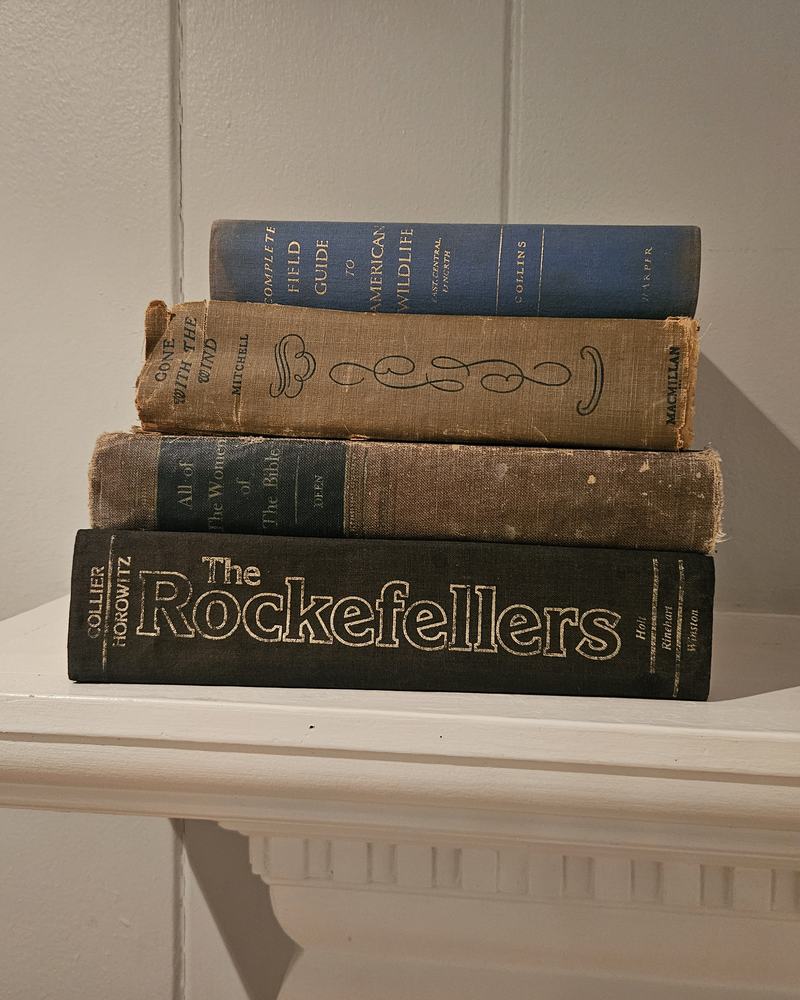
Styling guide
Where to Buy Books for Decor: Bulk, Vintage and By Color
You can buy books for decor one at a time (used bookstores, antique and resale shops), in mixed boxes (online marketplaces), as faux book boxes (decor stores) or as color-sorted lots by the foot. Each route trades off time, cost, consistency and look.
Below: the options compared, what to check before you buy, and how to buy in bulk without ending up with a pile of mismatched paperbacks.
The main options at a glance
| Where | Best for | Time needed | Color consistency | Real books? |
|---|---|---|---|---|
| Used bookstores | A few special pieces | High | Low | Yes |
| Antique shops | Vintage spines, leather, gilt | High | Low | Yes |
| Secondhand and resale stores | Bargains, a book here and there | High | Low | Yes |
| Online marketplaces | Specific looks, small lots | Medium | Varies | Usually |
| Decor and big-box stores | Faux book boxes, coffee table books | Low | High | Often not |
| Color-sorted lots by the foot | Filling shelves quickly | Low | High | Yes |
Used bookstores
Pros: real books, charm, the chance to find something you'll actually read. Cons: you'll be sorting by color and size one book at a time; stock changes constantly; you may need many trips to fill a bookcase.
Tip: bring a paint chip or a photo of your shelf, and a tape measure. Note spine heights so a run won't look ragged.
Antique shops
Pros: older cloth and leather bindings with gold lettering, perfect for a traditional library look. Cons: older books may be fragile, musty or priced as collectibles. You're paying for age and rarity you don't need for decor.
Tip: smell before you buy. Musty odors are hard to remove, and mold can spread to other books. Our how to clean old books guide explains what's fixable.
Secondhand and resale stores
Pros: low prices for individual books. Cons: selection is unpredictable and leans toward paperbacks; building a cohesive palette takes many visits.
Tip: look for hardcovers with plain cloth covers under the dust jackets. Removing a loud jacket often reveals a quiet, useful spine.
Online marketplaces
Pros: you can search for a specific look ("cream hardcover lot," "vintage blue books"), and buy small lots without leaving home. Cons: photos vary in quality, color can look different on arrival, and condition descriptions and return policies differ by seller. Shipping costs on heavy boxes add up.
Tip: read the return policy before you buy, and check where the seller ships.
Decor and big-box stores
Pros: easy to find, perfectly uniform. Cons: many decorative "books" are faux: hollow boxes, foam blocks or blank pages with printed covers. Up close they can look flat or too perfect. We compare them in detail in fake vs. real decorative books.
Tip: faux boxes can work on very high shelves no one sees closely. For eye-level shelves and coffee tables, real books usually look better.
Color-sorted lots by the foot
Pros: real hardcover books already grouped by color, sold by length, so you can fill shelves in one order. Consistent palette, no sorting. Cons: you don't choose individual titles; specific books vary from lot to lot.
This is what we do at River Birch Books. Our lots are real hardcover books sorted into named palettes such as Dunes cream and ivory, Driftwood tan and soft brown and Autumn Oak burgundy, rust and deep brown. For a collected, aged look, there's the 2-foot Vintage-Look Shelf Collection. See the full range on our books by the foot page.
What to check before you buy (anywhere)
- Hardcover vs. paperback. Hardcovers hold their shape, stack neatly and look substantial. Paperbacks slump and curl.
- Color consistency. For decor, the palette matters more than the titles.
- Size range. A mix of heights looks natural; too much variation looks messy.
- Condition. Look for clean, intact books. Avoid water damage, loose spines and any musty smell.
- Odor and mold. The Library of Congress advises taking safety precautions with active mold and notes that fuzzy or slimy mold shouldn't be disturbed. Don't bring moldy books into your home.
- Returns. Know what happens if the color or condition isn't right.
- Shipping. Books are heavy; check what shipping costs and where the seller ships.
How to buy in bulk wisely
Measure first. Add up the length of every shelf you want to fill, then decide how full you want them. A shelf styled with objects needs fewer books than a full library wall. Our guides to how to measure shelves for books by the foot and how many books per foot of shelf walk through the math.
Then: - Choose one or two palettes for the whole room. - Buy a little less than you think. Styled shelves with objects look better than packed ones, and you can add later. - Plan for stacks. Five-book stacks are useful for coffee tables, mantels and shelf accents. - Keep extras. A few spare books let you swap or refill as you restyle.
Cost comparison: time vs. money
Hunting book by book can look cheaper per book, but time adds up: multiple trips, sorting, cleaning and inevitable mismatches. Ordering by color costs more upfront but takes minutes and arrives ready to style. Many people mix both: a base of color-sorted books, plus a few special finds over time.
For reference, our prices are $39.99 for a five-book shelf stack, $69.99 for 1 foot (about 10-12 books) and $129.99 for 2 feet (about 20-24 books). Sea Glass is $42.99, $74.99 and $139.99. Shipping is free to the continental U.S. and D.C.; we don't ship to Alaska, Hawaii, U.S. territories, APO/FPO addresses or internationally.
For stagers, designers and businesses
If you buy books regularly for staging, rentals or commercial spaces, consistency matters most: the same palette, every time. See how to stage bookshelves to sell a house, our books for staging collection and our trade page.
Bringing books home
However you buy, a little care helps: - dust books before shelving them, using an unscented magnetic cloth or a soft brush, working outward from the spine as the Northeast Document Conservation Center recommends, - let any slightly stale-smelling books air out in a cool, dry room, - shelve upright with bookends, away from direct sun.
Mixing sources
There's no rule that every book must come from the same place. A common approach is a color-sorted base for most of the shelf, a few special pieces you find over time (an old atlas, a favorite novel, a family book), and one or two objects with meaning. The base keeps the shelf cohesive; the finds make it personal.
Returns on decor books
If a palette doesn't suit your room, we offer 90-day returns. The buyer pays return shipping, there's no restocking fee and sales tax is refunded. Details are on our shipping and returns page.
Buy books by color and by the foot
Good used condition: clean and intact, with light shelf wear possible. Browse every color on our decorative books page and choose the one that suits your shelves.
Frequently asked questions
Where can I buy books for decorating in bulk?
Books-by-the-foot sellers and color-sorted lots are the simplest way to buy in bulk. You order by length and color instead of hunting book by book.
Where can I buy old books for decorating?
Used bookstores, antique shops, secondhand stores and online marketplaces all carry older books. Expect to spend time sorting for color, size and condition.
Are fake decorative books cheaper than real ones?
Sometimes, but they look flatter up close and can't be opened. See our guide to fake vs. real decorative books for a full comparison.
What should I check before buying books for decor?
Hardcover or paperback, color consistency, size range, condition, musty odor, the seller's return policy and whether shipping reaches you.